Your cart
Your cart is empty

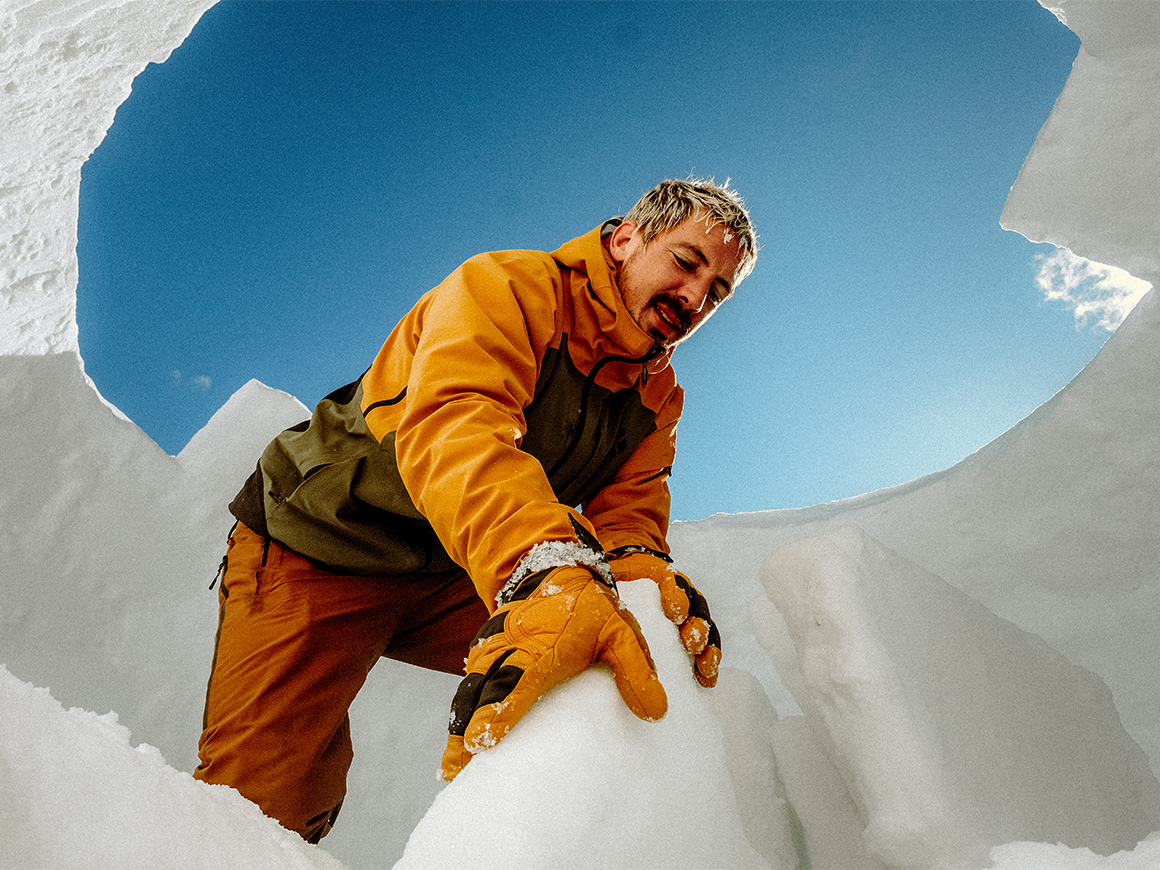
My name is Xavier Bourgois, I’m 41 years old and I’m originally from Calvados in Normandy. Three years ago, I left Paris to move to Lorient in Brittany. I divide my time between my work as a videographer (video production and content for my YouTube channel The Other Life) and a part-time job at a charity as head of communications and content creation. I enjoy spending ages browsing in bookshops, hunting for bargains at flea markets, playing a game of cricket or darts, slipping on a fresh pair of socks, and going on microadventures.
I studied in Angers and obtained a Master’s degree in communications. I began my career as a social media manager for major brands at a Parisian communications agency. I was in charge of managing Mercedes-Benz’s social media, for example. At 30, my life was fairly stable and well-organised. But following a break-up, the dominoes started to fall.
Life sometimes places you at a crossroads. It doesn’t happen every other day, but when it does, you either choose to seize the moment, take a clear-eyed look at the situation and take a turn (left or right), or you carry on straight ahead out of convenience or obligation.
My clear-eyed assessment was this: I don’t really like my job. Someone has bought my energy and my skills so that I can sit in front of a screen for 70 per cent of my waking hours, helping them to sell more cars. Cars that have no real intention of leading the world towards a better future.
A resolve then took hold of me as I returned from holiday: to request a mutually agreed termination before the end of the week and change course. I set myself an ultimatum to ensure this boldness didn’t fade away. And set course for where? It’s not yet clear, but some guiding principles are taking shape: travel, storytelling, art and creativity, and being outdoors.
A large rucksack and six months of travelling later (during which I became a freediving instructor and then a volunteer at sea for the NGO Sea Shepherd), I returned to France with the plan to launch a YouTube channel dedicated to microadventures.
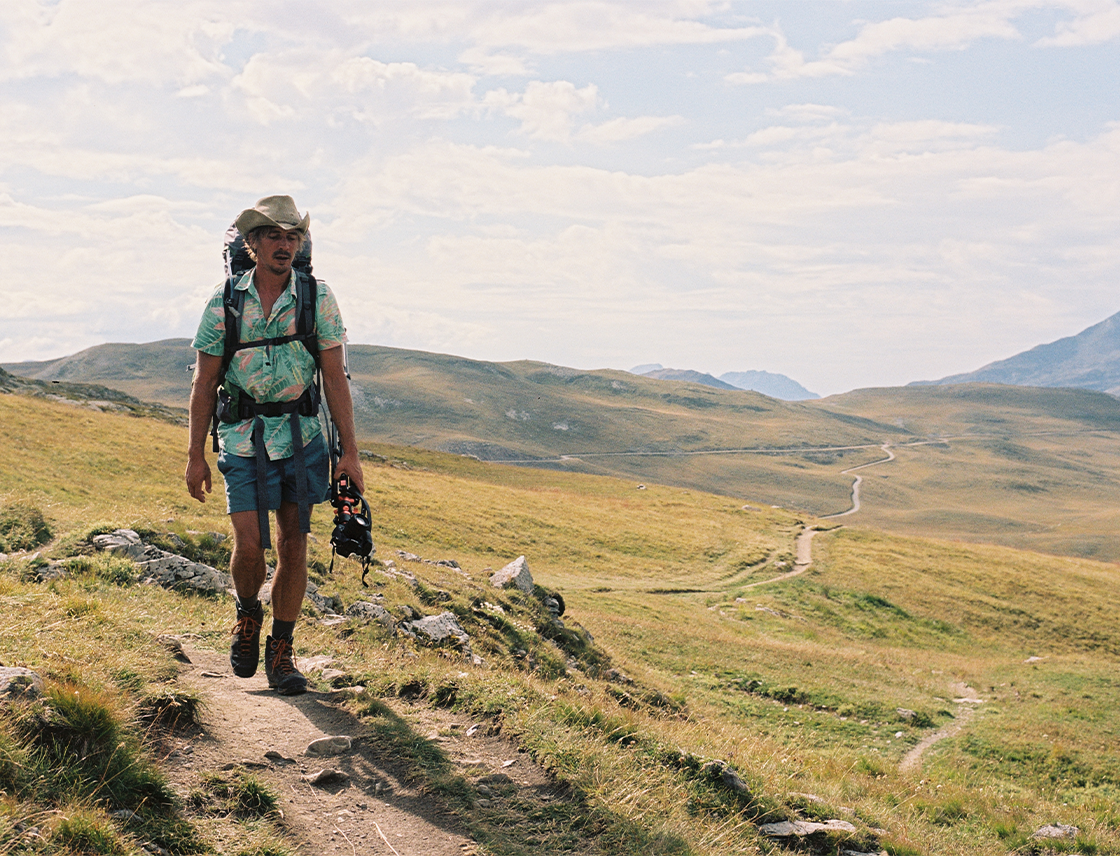
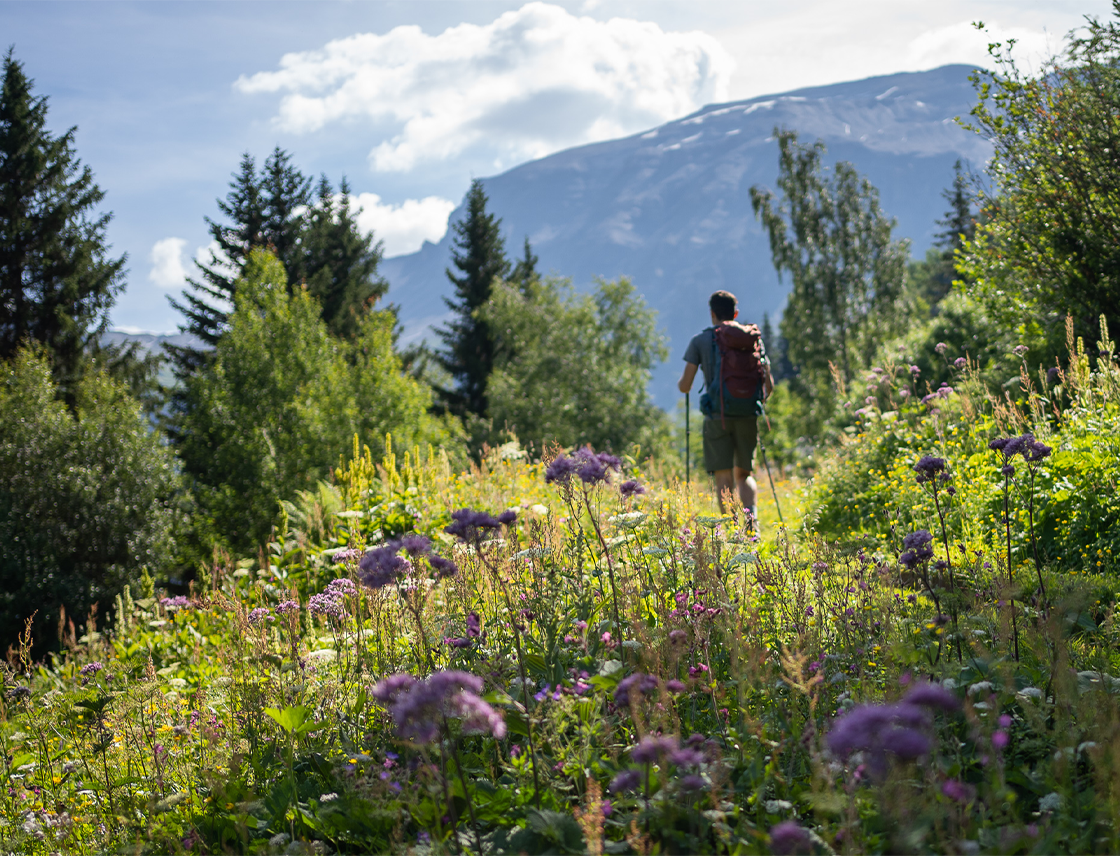
I remember in Year 9 borrowing a career guidance booklet called ‘Les métiers du cinéma’ (Careers in Film) from the school library, published by L’Étudiant. I was really drawn to film directing and had this deep desire to tell stories. At the age of 15, I was given a Sony camera for Christmas and started trying my hand at making amateur films with my friends. But life often leads us towards sensible choices, and I put the camera away. I’d eventually pick it up again 15 years later. Perhaps a career change isn’t so much about reinventing yourself as it is about finding yourself again?

In my adventures, I often try to transform a fabulous, faraway story into something very tangible and local. Turning my travel dreams into reality. That’s actually how my first idea for a microadventure in the Vosges came about – the one that launched my channel. The formula is often the same: I’m fascinated by an adventure story, I adapt it to my limited availability, my rudimentary technical skills and my even more rudimentary budget, and the result is a microadventure.
Let’s go back to that first microadventure.
It’s 2016 and, whilst reading, I come across *In the Forests of Siberia*, in which Sylvain Tesson spends six months travelling 6,000 km to live in isolation in a rustic cabin near Lake Baikal. At the same time, I was reading about and discovering this Englishman, Alastair Humphreys, who came up with the concept of microadventures.
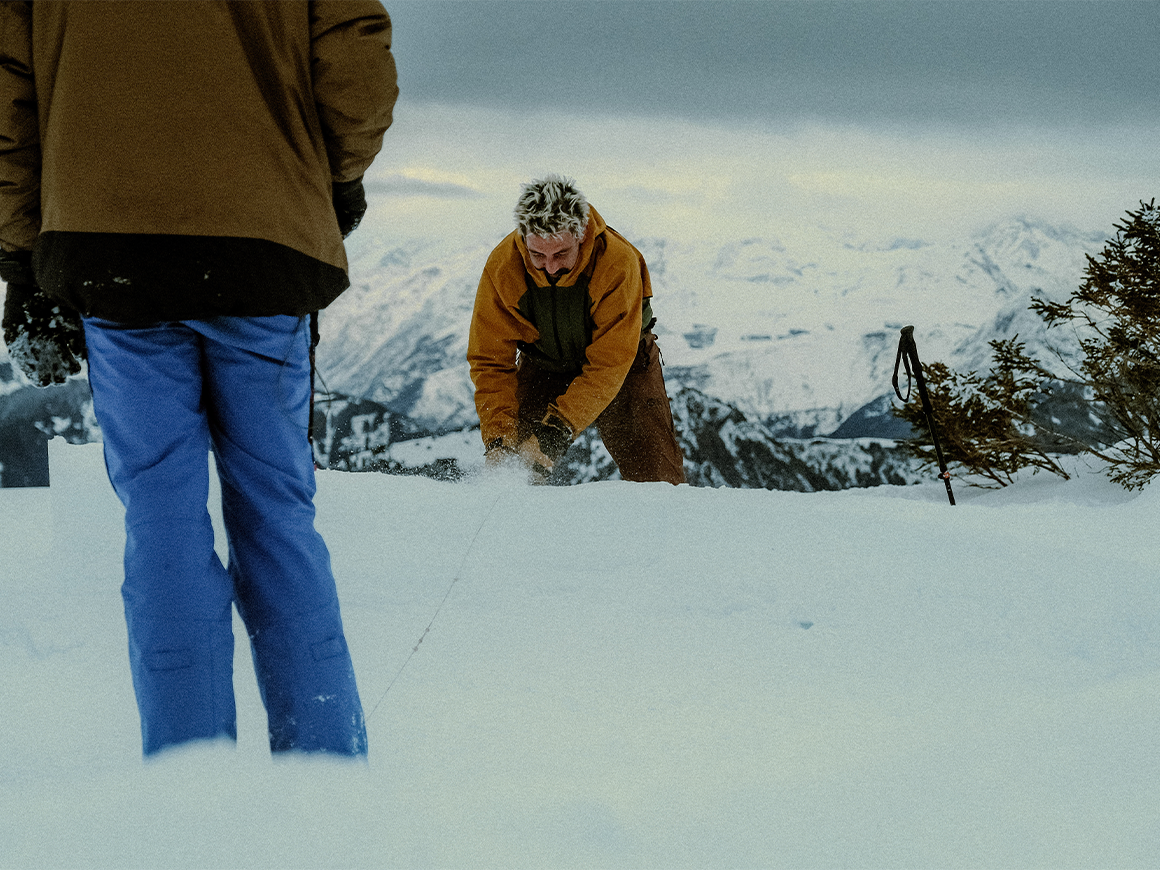
He says that adventure begins on your doorstep, that there’s no need to go far or for long, and that ultimately 75 per cent of the benefits of a big trip can be found in small ones. My mind blends these two projects and I imagine a story where I set off – not for six months but for six days, not 6,000 km away to Siberia but 600 km away to the Vosges. Amused by this thought experiment, I tell myself that this exercise in scaling things down (and in simplicity, too) has a bright future if we apply it to tourism and travel.
And so, rather than embarking on adventures in Patagonia, the Himalayas or the Mongolian steppes,I’ve decided to highlight some closer alternatives: rafting down the Loire, paragliding in Annecy, building a giant igloo, trekking through snow-covered Corsica, or heading to the Jura to enjoy a Mont-d’Or at Mont d’Or.And in doing so, I’ve become utterly captivated by these wonders in my own country.
I’m actually discovering all the benefits of grand adventures in these little getaways. The ease of organisation even allows me to experience several extraordinary moments like these each year, rather than staking everything on one massive trip with high expectations, which requires a lot of organisation and a big budget, and which often struggles to materialise.
By sharing my video reports on YouTube, I wanted to show that going on an adventure wasn’t just for an elite few, and that you didn’t need to be a top-level athlete to set off on a trek. But the same comments kept coming back: ‘Thanks for your videos, but I don’t feel capable of doing what you do’, ‘Which rucksack would you recommend for a beginner?’, ‘How do you come up with your routes and ideas?’, “Your campfire recipes look brilliant, but I’m hopeless at cooking out in the wild…”
Some didn’t dare set off, whilst others might have considered it but had a thousand questions. I realised that, with the hundreds and hundreds of questions I was reading and answering, I’d gained a very clear insight into the obstacles and doubts people face when setting off on an adventure. And I thought to myself that one day I’d have to take the time to put together proper answers and write a book that would enable anyone to confidently start planning their own micro-adventures.
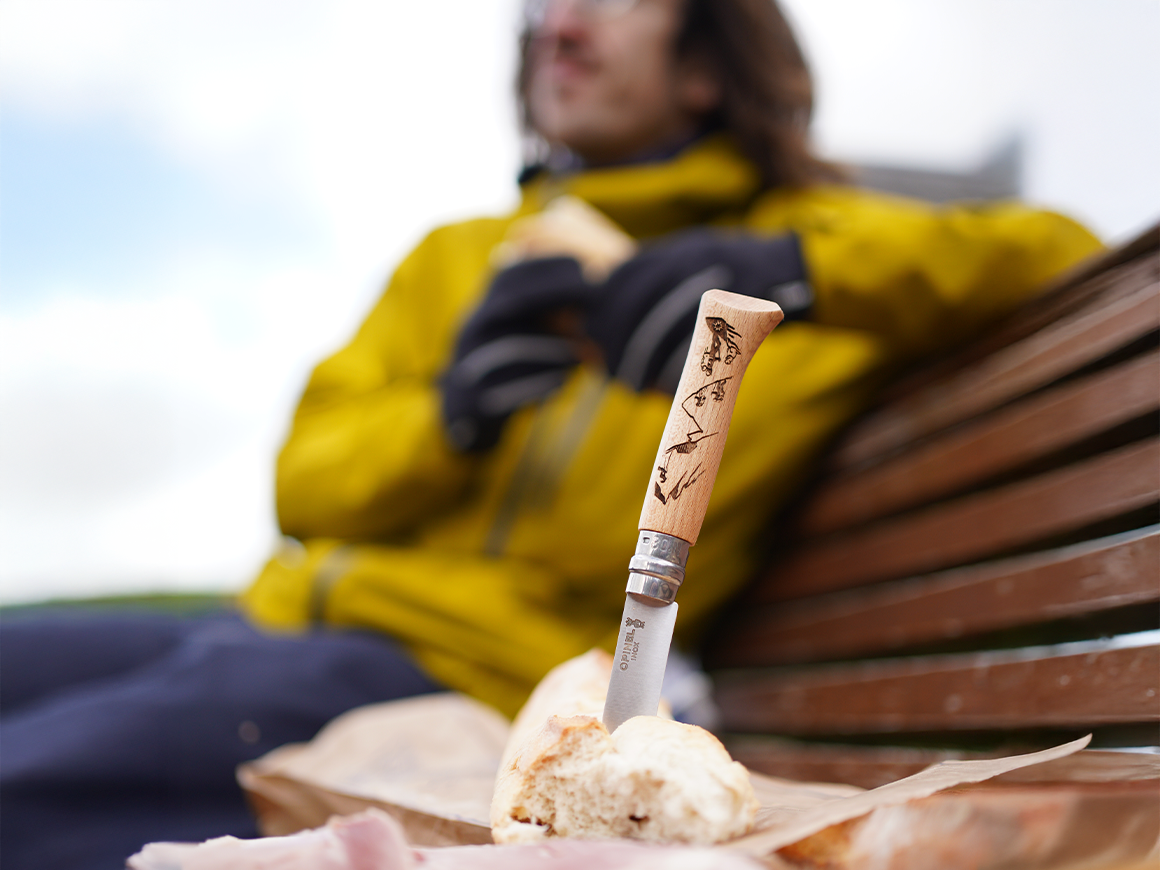
I’m not very good at canvassing or selling myself. When I was looking for funding to support my work, I only targeted a few brands and companies that seemed to me to be a perfect fit with the values of my channel and my world. As luck would have it, a friend of mine from Lorient, the sailor Itzel Marie Diaz, was also looking for partners to help her sail solo across the Atlantic. And it was Opinel who responded favourably. We were delighted for her that her dream of crossing the Atlantic could become a reality thanks to this new partner. I was myself in the midst of looking for partners to help me fund six new episodes for my YouTube channel. And I thought to myself: Opinel / The Other Life – what a brilliant combination. It was a no-brainer. I took a chance, they liked my project, and I was invited to travel across France to meet the team in Savoie and discuss the project. It was a journey that felt like a test of my determination, but I was motivated, and a few weeks later, I met them. We hit it off straight away.
It was when I was crossing the Pyrenees on horseback in 2024. We’re a group of seven women and four men crossing the entire range (60 days on horseback spread over four expeditions). Every summer, we go on a 15-day expedition, and in four years’ time, we’ll have completed the entire crossing.
We’d only been travelling with the group for two days when I realised I’d lost my Opinel.The thought of going through this whole adventure without my knife saddens me, and up on the ridges, shops and stores are few and far between. Jarek, a 73-year-old German riding with us, watches me struggling with my single fork and sees me borrowing the shared knife. He realises I’ve lost my knife and hands me his. An Opinel that’s stood the test of time but is still in excellent condition. He tells me he has a second knife in his bag and goes to fetch it. I sense that his Opinel has a story behind it and thank him for helping me out. At the end of the trip, I try to give it back to him but he refuses, encouraging me to keep it. For him, it’s my turn to write and continue the story of this knife.
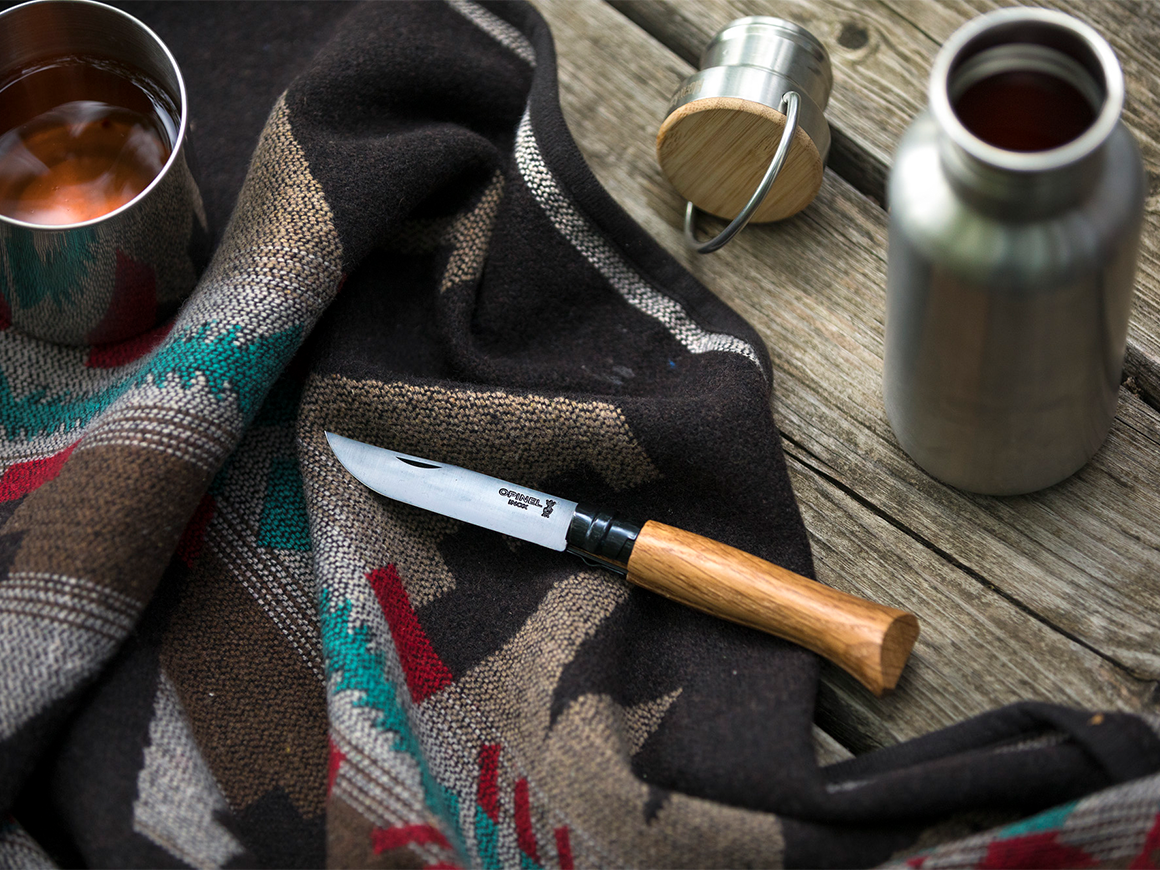
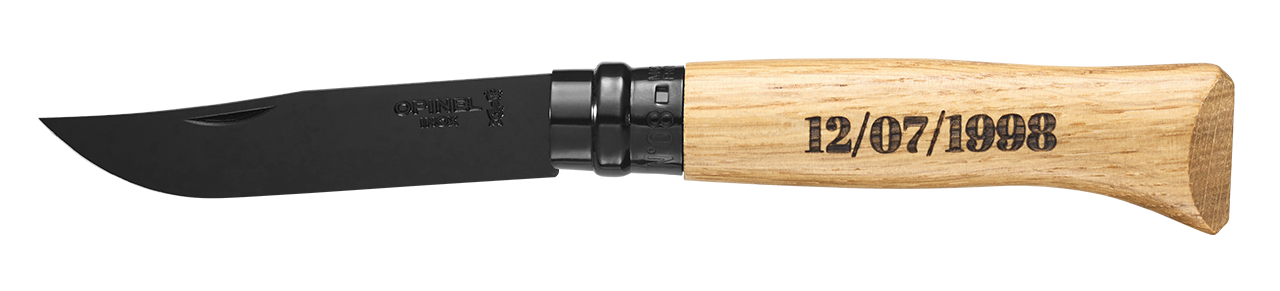
I really love my little pocket knife No. 08 Black Oak.
I feel like I have a very unique knife, and the black finish always makes quite an impression on newcomers.
However, ever since I discovered the Picnic+ Set, I never set off on an adventure without my fork and spoon.
Unifying – we all have a story to share, a special memory linked to an Opinel knife.
Popular – I love that this brand appeals to absolutely everyone. These aren’t elitist or snobbish knives. They’re beautiful knives for everyone.
Reliable – it’s still important not to be let down by a knife’s sharpness, and with Opinel, that promise is always kept.
I’ll add a fourth: Family-oriented. By forming a partnership with Opinel, I’ve found human connections, meaningful encounters, a willingness to listen, trust and a family spirit that still seems to drive the whole team to this day. And that feels great!
Are you sure you want to perform this action?